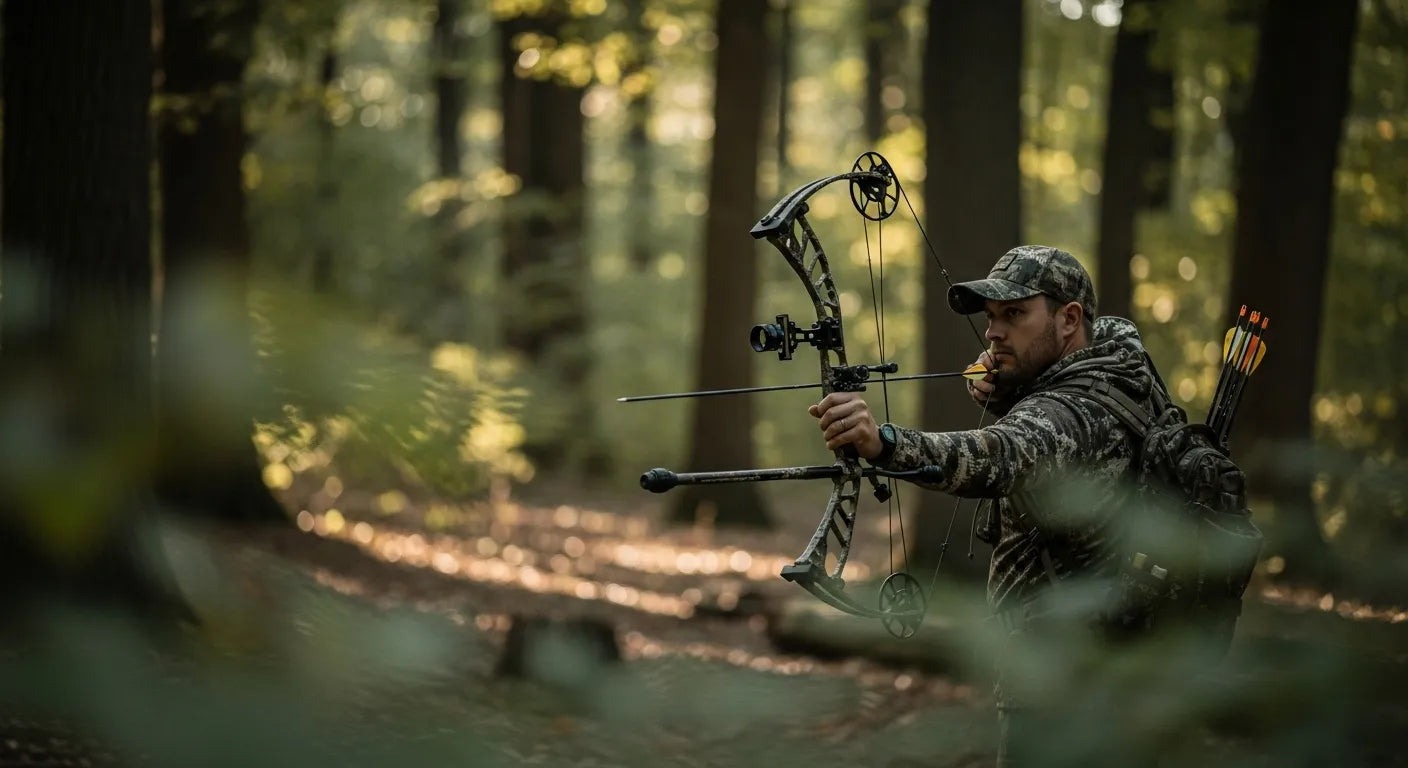
Balancing Arrow Weight and Accuracy A Practical Guide
While many archers obsess over their bow’s settings, the projectile often gets overlooked. Finding the perfect balance between arrow weight and accuracy is one of the most critical steps in tuning your setup. It is a constant tug-of-war between speed and stability. A light arrow flies fast and flat, forgiving distance estimation errors. A heavy arrow strikes with authority and resists wind drift but requires precise rangefinding.
Understanding Arrow Weight
Before you can tune your equipment, you have to understand the metrics. In archery, weight isn’t measured in ounces or grams, but in grains. To put it in perspective, there are 437.5 grains in a single ounce. It is a precise unit of measurement that allows for granular adjustments to your setup.
Total arrow weight isn’t just about the shaft. It is the sum of several components, and changing any single one of them alters the flight characteristics of the arrow.
Grains Per Inch (GPI)
This is the standard measurement for the arrow shaft itself. Manufacturers list the GPI on the shaft, telling you how heavy the carbon or aluminum tube is for every inch of length. A high GPI results in a durable, heavy arrow, while a low GPI is designed for speed.
Front-End Components
The business end of the arrow contributes significantly to the total mass. This includes the insert (the piece glued into the shaft) and the point or broadhead. This is where many archers make their most impactful adjustments. For example, switching from a standard 100-grain field point to 125-grain broadheads increases the Front of Center (FOC) percentage, which can pull the arrow’s center of gravity forward and improve stability.
Rear-End Components
On the back end, you have the nock and the fletchings (vanes or feathers). While these are generally light, they still count. Three large plastic vanes will weigh more than three small feathers. When you are chasing perfection, every grain matters.
How Weight Impacts Accuracy
The debate between light and heavy arrows usually centers on two factors: trajectory and stability. Both affect accuracy, but in different ways.
The Case for Speed (Lighter Arrows)
Lighter arrows leave the bow faster. The primary advantage here is a flatter trajectory. If you misjudge a target by three yards, a fast arrow won’t drop as much as a slow one, meaning you might still hit the kill zone or the scoring ring. For 3D archers or hunters in open country where ranges vary, a flatter trajectory offers a larger margin for error regarding distance.
However, speed comes with a cost. Light arrows are more susceptible to wind drift. A crosswind will push a light, fast arrow off course much more easily than a heavy one. Additionally, light arrows can make your bow louder, as there is less mass to absorb the energy of the bow limbs upon release.
The Case for Stability (Heavier Arrows)
Heavier arrows are slower, which means they arc more during flight. You need to know your exact distance to the target to be accurate. However, heavy arrows are inherently more stable. They carry more momentum, which helps them “buck” the wind and maintain their course in breezy conditions.
Furthermore, a heavier arrow absorbs more energy from the bow, making the shot quieter and reducing vibration in the hand. This creates a more pleasant shooting experience, which can surprisingly help with shooter consistency and form.
Factors Affecting Optimal Arrow Weight
There is no universal “best” weight. The right arrow for you depends on your specific equipment and what you intend to shoot.
Draw Weight
Your bow’s power dictates what it can handle. If you shoot a low draw weight (e.g., 40 lbs), a massive, heavy arrow will drop like a stone, making accuracy difficult past 20 yards. Conversely, if you shoot a 70 lb bow, you need a certain amount of arrow weight to safely absorb that energy. Shooting an arrow that is too light out of a high-poundage bow is dangerous; it mimics a dry fire and can damage the bow or injure the shooter.
Draw Length
Archers with longer draw lengths naturally shoot heavier arrows because their shafts are longer. However, they also generate more power because the arrow stays on the string longer during the power stroke. If you have a short draw length, you may need to experiment with lighter components to achieve the velocity required for good accuracy.
Shooting Discipline
- Target Archery: These shooters often prefer a middle-ground. They need enough weight to be stable in the wind but enough speed to minimize drop.
- Hunters: This group often leans toward heavier arrows. Momentum is king for penetration. A heavy arrow might be harder to aim at long distances, but it is more likely to pass through bone and tissue effectively.
Testing and Tuning Your Setup
Finding your optimal balance requires range time. You cannot simply calculate this on paper; you have to see how the arrow reacts in the air.
Check the Spine Charts
Before experimenting with weight, ensure your arrow spine (stiffness) is correct for your bow. Adding weight to the front of the arrow weakens the spine. Removing weight stiffens it. Consult the manufacturer’s chart to ensure you are in the safe and tunable range.
Group Tuning
Buy field points in various weights (100, 125, and perhaps 150 grains). Shoot groups at 30 or 40 yards with each weight. Don’t worry about where they hit in relation to the bullseye yet; look at the size of the group. Often, a specific weight will tighten your groups significantly because the dynamic spine of the arrow matches your bow setup perfectly.
The Wind Test
If you shoot outdoors, test on a breezy day. Shoot a lighter setup and a heavier setup. Observe how much the wind pushes the arrow. If you find the lighter arrows are drifting six inches while the heavier ones only drift two, you have to decide if the loss of speed is worth the gain in wind resistance.
Broadhead Tuning
For hunters, the final test is the broadhead. A field point might fly true, but a broadhead has surface area that catches air. Often, a slightly heavier arrow with a higher FOC (Front of Center) will steer a broadhead more accurately than a light, fast arrow. This is where experimenting with those heavier inserts or point weights pays off.
Conclusion
Don’t be afraid to tinker. Buy a few different single shafts rather than committing to a dozen. Experiment with point weights. Record your results. By understanding the physics behind the flight, you can build a setup that complements your shooting style and ensures that when your form is true, your arrow finds its mark.
Disclaimer
The information provided in this article, “Balancing Arrow Weight and Accuracy: A Practical Guide,” is intended for educational and informational purposes only. Archery involves inherent risks, including the potential for serious injury or property damage. The recommendations, techniques, and guidelines discussed here are based on general principles and personal experience; they may not be suitable for every archer, bow type, or shooting condition.
Always follow manufacturer instructions for your equipment and consult with a qualified archery coach or professional before making significant adjustments to your bow or arrows. Use proper safety gear and practice in a controlled environment. The author and publisher assume no responsibility or liability for accidents, injuries, or damages that may occur while applying the information in this guide.